DNA Analysis in Forensic Science

DNA analysis is a crucial tool in forensic science that relies on the unique genetic code found in every cell of the human body. By analyzing DNA samples obtained from crime scenes, investigators can identify suspects, confirm relationships between individuals, and establish the innocence or guilt of a person. This powerful technique has revolutionized the field of forensic science and has played a significant role in solving countless criminal cases.

The process of DNA analysis involves several steps, including sample collection, DNA extraction, amplification, and analysis. Sample collection typically involves collecting biological samples such as blood, saliva, or hair from the crime scene. Once the DNA is isolated from the biological material, it is amplified using polymerase chain reaction (PCR) to create millions of copies for analysis. The DNA profiles obtained from the samples are then compared to a DNA database to identify potential matches.

DNA analysis has proven to be highly accurate and reliable, with the ability to differentiate between individuals with extremely high precision. It has become a standard technique in forensic investigations, helping to exonerate innocent individuals and bring criminals to justice. By understanding the science behind DNA analysis, forensic scientists are able to provide crucial evidence in criminal cases and contribute to the pursuit of justice.

Key Lesson Concepts:

  • DNA analysis is a powerful tool used in forensic science to identify suspects and establish innocence or guilt.
  • The process of DNA analysis involves sample collection, DNA extraction, amplification, and analysis.
  • DNA analysis is highly accurate and reliable, playing a crucial role in forensic investigations and criminal justice.

DNA analysis has revolutionized forensic science, providing a powerful tool for identifying individuals and establishing connections between suspects, victims, and crime scenes. This technique relies on the unique genetic makeup of individuals, making it a cornerstone in modern criminal investigations.

Historical Context:

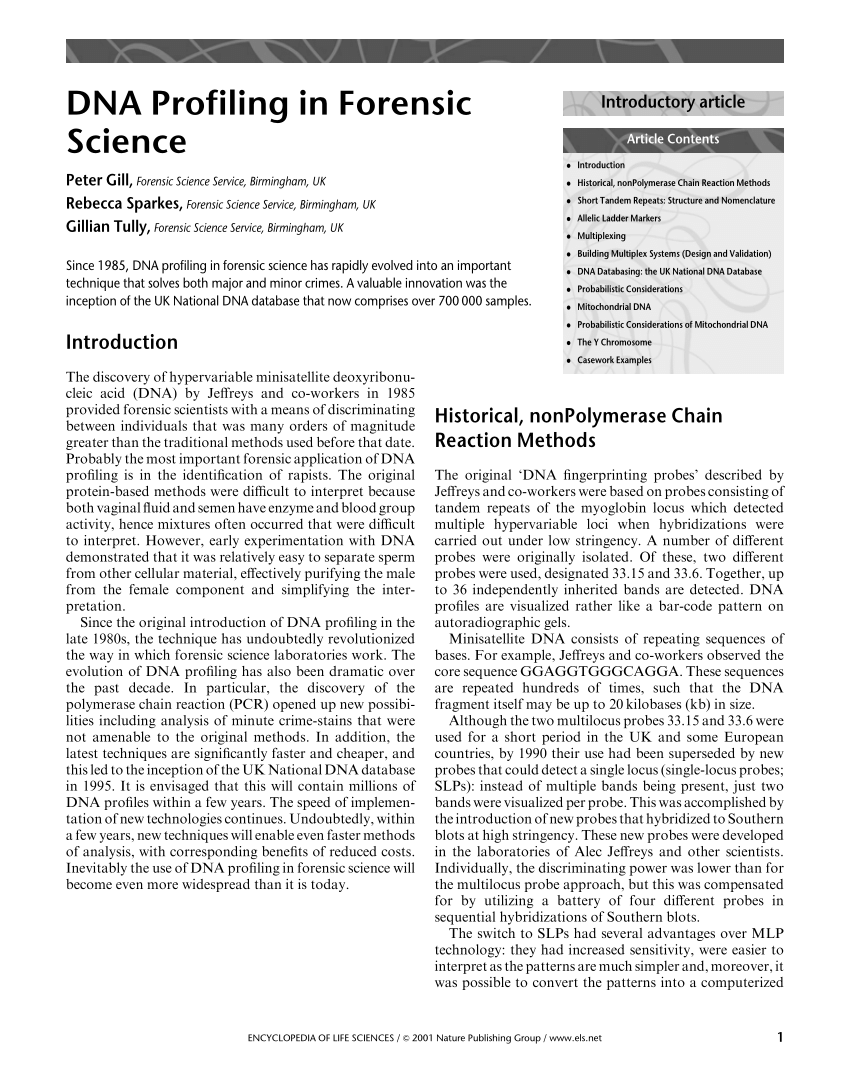
The advent of DNA profiling in the mid-1980s marked a significant milestone in forensic science. Developed by Sir Alec Jeffreys in 1985, DNA profiling enabled the identification of individuals based on their unique genetic patterns. This breakthrough was first applied in forensic casework in 1986, leading to the exoneration of an innocent suspect and the conviction of the true perpetrator in a double murder case.

Wikipedia

Types of DNA Used in Forensic Analysis:

  • Nuclear DNA: Found in the nucleus of a cell, inherited from both parents, and unique to each individual (except identical twins). It is commonly analyzed in forensic cases to establish identity.
  • Mitochondrial DNA (mtDNA): Located in the mitochondria, inherited maternally, and useful for analyzing samples where nuclear DNA is degraded or insufficient, such as hair shafts or old bones.
  • Wikipedia

Collection and Preservation of DNA Evidence:

Proper collection and preservation of DNA evidence are crucial to prevent contamination and degradation. Common sources include blood, saliva, semen, hair, and skin cells. Samples should be air-dried, stored in paper bags or envelopes, and kept in cool, dry conditions to maintain integrity.

Forensic Science Simplified

Analytical Techniques:

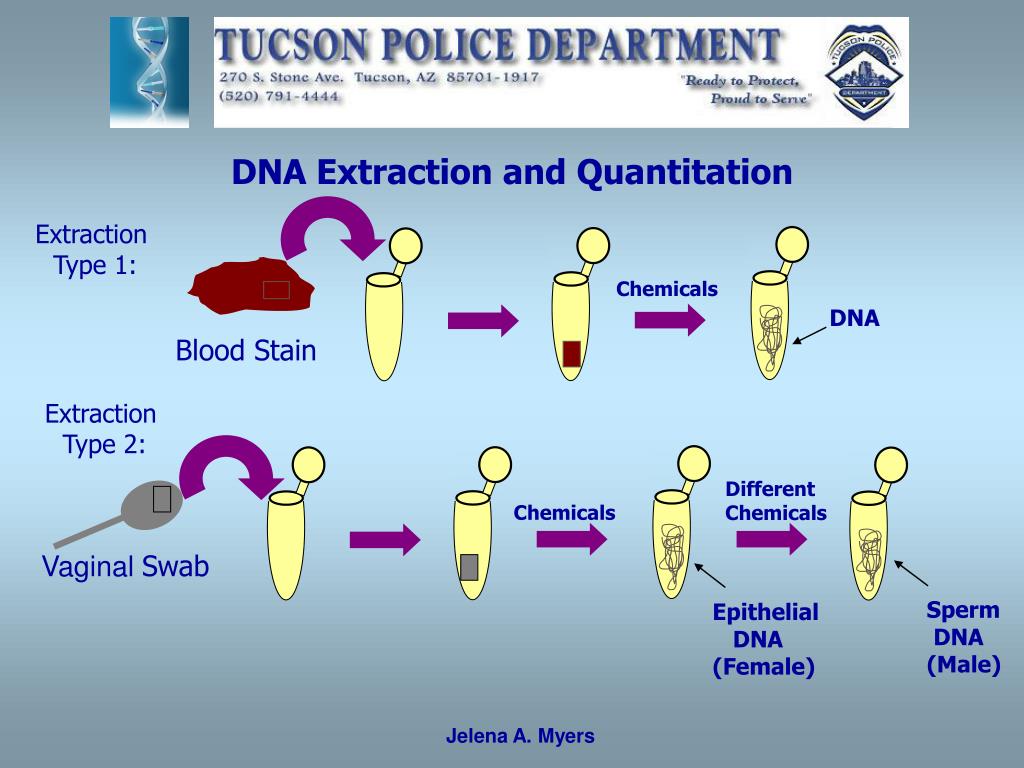
  1. Extraction: Isolating DNA from biological samples using methods such as organic extraction, Chelex extraction, or silica-based techniques.
  2. Wikipedia
  3. Quantification: Determining the amount of DNA present to ensure sufficient material for analysis, often using real-time PCR (quantitative PCR).
  4. Wikipedia
  5. Amplification: Employing Polymerase Chain Reaction (PCR) to amplify specific DNA regions, generating enough material for profiling.
  6. Wikipedia
  7. Separation and Detection: Utilizing techniques like capillary electrophoresis to separate amplified DNA fragments by size, allowing for the creation of a DNA profile.
  8. Wikipedia
  9. Interpretation: Comparing DNA profiles to known samples or databases to identify individuals or establish familial relationships.
  10. Wikipedia

Applications in Forensic Science:

Challenges and Considerations:

  • Contamination: Strict protocols are necessary to prevent contamination of DNA samples during collection, storage, and analysis.
  • Forensic Science Simplified
  • Degradation: Environmental factors can degrade DNA, making analysis difficult; however, advanced techniques can sometimes recover usable profiles from degraded samples.
  • Wikipedia
  • Mixed Samples: Samples containing DNA from multiple individuals require complex interpretation to deconvolute individual profiles.
  • Wikipedia
  • Ethical and Legal Issues: The collection and storage of DNA profiles raise privacy concerns and require careful ethical and legal considerations.
  • Alliant International University

Advancements in DNA Analysis:

Recent developments include Next-Generation Sequencing (NGS), which allows for more comprehensive analysis of genetic material, and the use of forensic investigative genetic genealogy (FIGG) to solve cold cases by linking DNA profiles to distant relatives through public databases.

The Australian

In summary, DNA analysis has become an indispensable tool in forensic science, offering unparalleled accuracy in identifying individuals and solving crimes. Ongoing advancements continue to enhance its effectiveness and application across various domains of criminal justice.


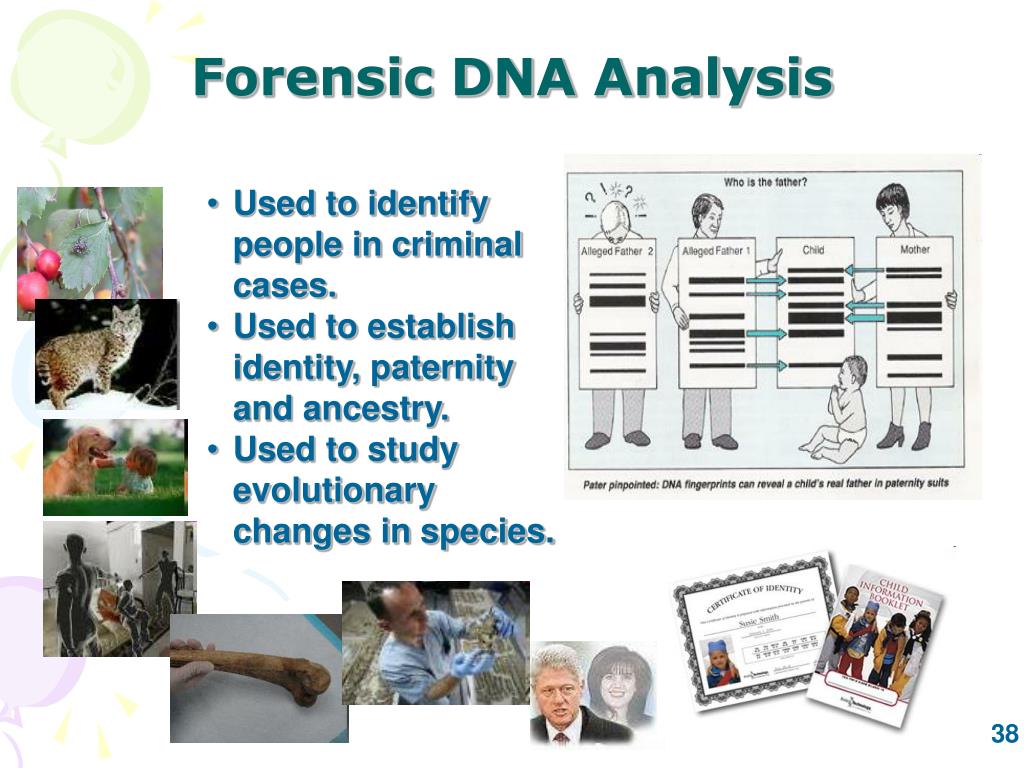
DNA analysis is a fundamental tool in forensic science that has revolutionized the way investigations are conducted. DNA, or deoxyribonucleic acid, is the genetic material that carries unique genetic information in all living organisms, including humans. In forensic science, DNA analysis is used to identify individuals, establish paternity or maternity, determine familial relationships, and link suspects to crime scenes. By comparing DNA samples collected from crime scenes with those of suspects or a DNA database, forensic scientists can provide crucial evidence to help solve crimes and bring perpetrators to justice.

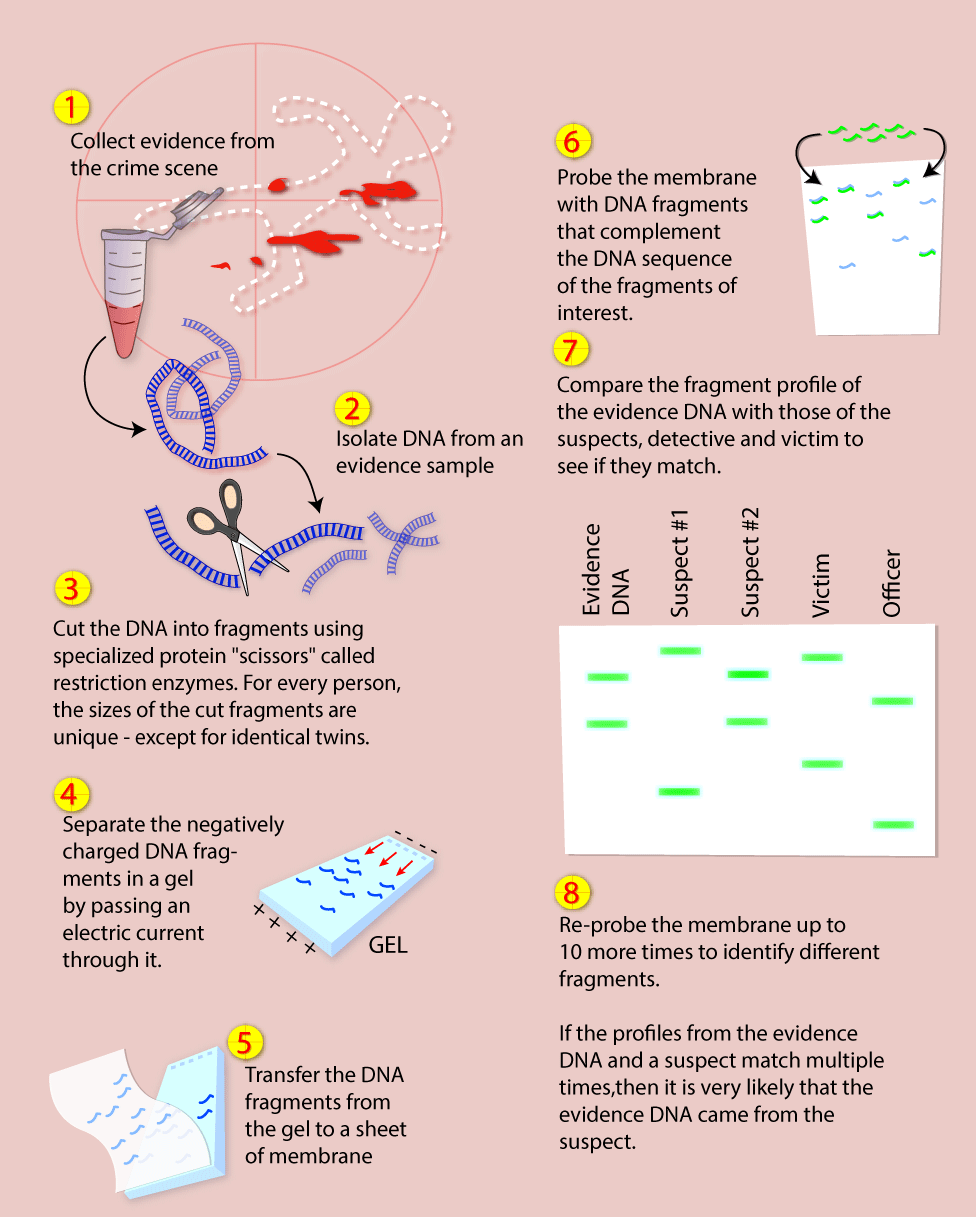
The process of DNA analysis in forensic science involves several key steps. First, DNA is extracted from biological samples collected at a crime scene, such as blood, saliva, hair, or skin cells. Next, the extracted DNA is amplified through a process called polymerase chain reaction (PCR) to produce enough DNA for analysis. Then, forensic scientists use various techniques, such as short tandem repeat (STR) analysis or DNA sequencing, to create a DNA profile unique to each individual. Finally, this DNA profile is compared to known profiles in DNA databases or other samples collected during the investigation to establish connections or exclusions.

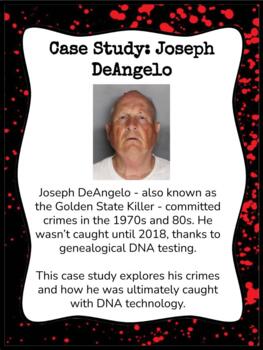
One of the most famous cases where DNA analysis played a pivotal role in solving a crime was the case of the Golden State Killer. Law enforcement used a public genealogy database to identify a suspect based on DNA evidence collected from crime scenes decades earlier. Through meticulous DNA analysis and comparison, they were able to link the suspect to the crimes, leading to his arrest and conviction. This case showcased the power of DNA analysis in forensic science and its ability to provide answers even years after a crime has been committed. Overall, DNA analysis continues to be a cornerstone of forensic investigations, offering valuable insights and breakthroughs in solving complex cases.

Notes for DNA Analysis in Forensic Science

  1. Forensic Laboratory Setup:
    • A clean, organized forensic lab with workstations.
    • Scientists working on computers analyzing DNA data.
    • Equipment visible: genetic sequencers, microscopes, pipettes, and test tubes.
  1. DNA Sample Collection:
    • Gloved hands collecting samples from a crime scene (blood swabs, hair strands).
    • Evidence being sealed in labeled, tamper-proof containers.
  1. DNA Profiling Process:
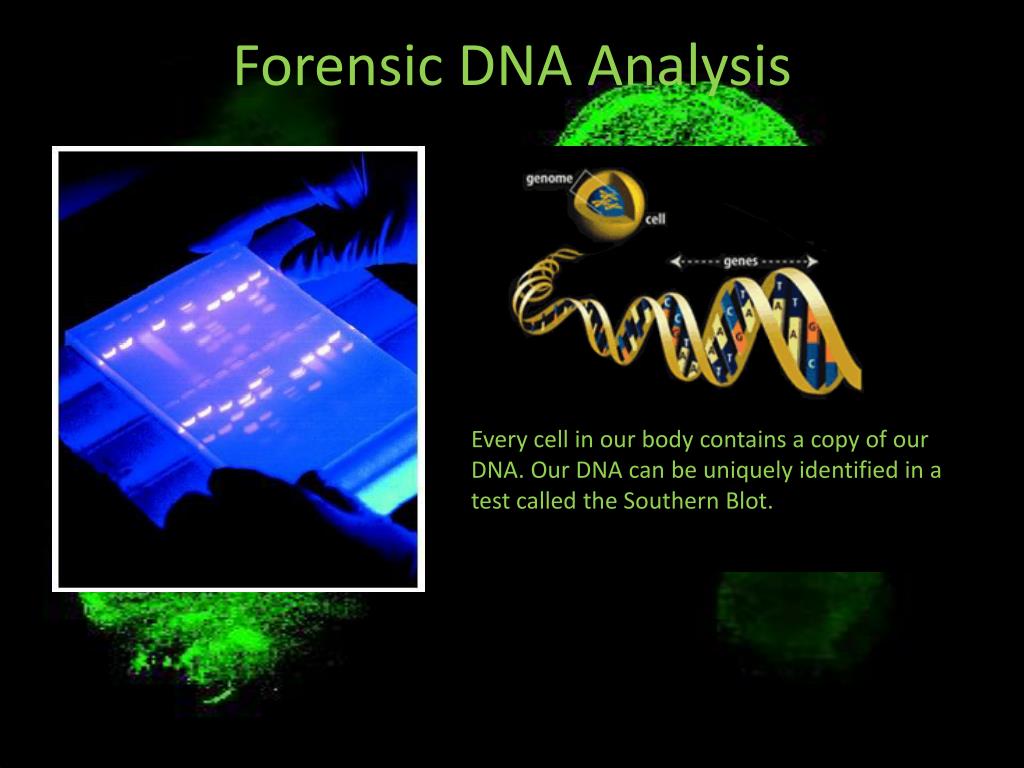
    • Close-up of an electrophoresis gel showing DNA bands.
    • DNA amplification using Polymerase Chain Reaction (PCR) machines.
  1. DNA Match Analysis:
    • A computer screen displaying DNA profiles compared side-by-side.
    • Charts and graphs highlighting matches between samples.
  1. Case File Representation:
    • A crime scene photo (hypothetical) with markers where DNA evidence was found.
    • A folder labeled "Forensic DNA Case File" containing printed reports of DNA sequences and a suspect match.

Conceptual Casefile for DNA Analysis

  • Case Name: “Mystery at the Riverside”
  • Case Details:
    • Victim: John Doe, found near a riverside with blood on the rocks.
    • Evidence Collected: Blood swabs from rocks, hair strand on the victim’s shirt, and cigarette butt found near the scene.
  • DNA Analysis Steps:
    1. Blood swabs tested for nuclear DNA; results indicate male donor.
    2. Mitochondrial DNA from hair matches maternal lineage of a local suspect.
    3. DNA from the cigarette butt matches the primary suspect’s profile in the national database.
  • Conclusion:
    • DNA evidence corroborates the suspect's presence at the crime scene, leading to further questioning and eventual confession.


DNA analysis has become a cornerstone of forensic science, enabling the identification of individuals and the resolution of criminal cases with unprecedented accuracy. The process involves several key steps:

  1. Sample Collection: Biological materials such as blood, saliva, hair, or skin cells are meticulously collected from crime scenes. Proper collection and preservation are crucial to prevent contamination and degradation.
  2. Sorenson Forensics
  3. DNA Extraction: The DNA is isolated from the collected cells using chemical processes that break down cell membranes. This step yields purified DNA suitable for analysis.
  4. Sorenson Forensics
  5. Quantification: Determining the amount of DNA present ensures there is sufficient material for analysis and helps in assessing the quality of the sample.
  6. Sorenson Forensics
  7. Amplification (PCR): The Polymerase Chain Reaction (PCR) technique is used to amplify specific regions of the DNA, creating millions of copies of targeted sequences to facilitate detailed examination.
  8. Sorenson Forensics
  9. Separation and Analysis: Techniques such as capillary electrophoresis separate the amplified DNA fragments by size, allowing for the creation of a DNA profile. This profile can be compared to known samples for identification purposes.
  10. Sorenson Forensics
  11. Interpretation: The resulting DNA profiles are analyzed to determine matches or exclusions, aiding in identifying suspects or victims. This step requires careful statistical analysis to assess the significance of a match.
  12. Sorenson Forensics

The application of DNA analysis in forensic science has led to the resolution of numerous cold cases. For instance, the identification of the Golden State Killer was achieved through DNA evidence, bringing closure to crimes committed decades earlier.

Forensics Colleges

For visual representations of DNA analysis in forensic science, including laboratory procedures and case studies, the following resources offer a range of images:

  • Shutterstock: Offers a collection of high-quality images related to DNA analysis in forensic settings.
  • Shutterstock
  • Getty Images: Provides a variety of photos depicting forensic DNA analysis, laboratory environments, and related subjects.
  • Getty Images
  • Adobe Stock: Features a selection of forensic science DNA images suitable for educational and professional use.
  • Adobe Stock

These platforms offer visual insights into the meticulous processes involved in forensic DNA analysis, highlighting its critical role in modern criminal investigations.

Recent Advances in Forensic DNA Analysis

FaviconThe Sun

How cops use at-home DNA kits to uncover criminals in YOUR family - from Golden State killer to mystery baby deaths


How cops use at-home DNA kits to uncover criminals in YOUR family - from Golden State killer to mystery baby deaths

FaviconNew York Post

Elite NYC forensic team using science to solve decades-old mysteries and get justice for the dead


Elite NYC forensic team using science to solve decades-old mysteries and get justice for the dead

FaviconNews.com.au

Brutal rape and murder solved after 40yrs


PPT - Forensic DNA Analysis PowerPoint Presentation, free download - ID ...PPT - Forensic DNA Analysis Jelena A. Myers Senior Criminalist (DNA ...PPT - DNA and the Genetic Code PowerPoint Presentation, free download ...(PDF) DNA Profiling in Forensic ScienceDescribe the Use of Dna Profiling in Forensic Investigations QuizletPPT - Forensic DNA Analysis PowerPoint Presentation, free download - ID ...Forensics Case Study: Joseph DeAngelo ~ DNA Analysis & Databases

DNA analysis has revolutionized forensic science by providing investigators with a powerful tool to identify suspects, exonerate the innocent, and solve cold cases. One of the primary ways DNA is used in criminal cases is through DNA profiling, which involves comparing specific DNA sequences between individuals to determine whether they are related or if a match can be made to evidence found at a crime scene. This process begins by collecting DNA samples from the crime scene, such as blood, hair, or skin cells, and then comparing it to a suspect's DNA sample to see if there is a match.

Another important application of DNA analysis in criminal cases is the use of DNA databases, which store DNA profiles of known offenders and crime scene evidence. By searching these databases, investigators can link crimes to each other, identify potential suspects, and even exonerate individuals who have been wrongfully convicted. For example, in the case of the Golden State Killer, DNA evidence collected from crime scenes was linked to a distant relative in a public genealogy database, ultimately leading to the capture of the suspect.

Overall, the use of DNA analysis in criminal cases has significantly improved the accuracy of investigations and the criminal justice system as a whole. By providing irrefutable evidence linking suspects to crimes, DNA analysis has helped bring closure to victims and their families, while also ensuring that the guilty are held accountable for their actions. As technology continues to advance, DNA analysis will only become more precise and reliable, further enhancing its role in solving crimes and delivering justice.


One of the most powerful tools in forensic science is DNA analysis. This method involves examining DNA samples collected from a crime scene and comparing them to known samples to identify potential suspects. By analyzing specific regions of the DNA sequence, forensic experts can determine whether a sample matches that of a particular individual. This process can prove crucial in identifying perpetrators or excluding innocent individuals from suspicion in criminal cases. For example, if DNA found at a crime scene matches the DNA of a suspect, it can provide strong evidence linking that individual to the crime.

In cases of negligence, DNA analysis can also play a significant role in determining liability or responsibility. For instance, in cases of medical malpractice where a patient suffers harm due to a healthcare provider's actions, DNA testing can help establish whether the provider's actions directly contributed to the harm. By analyzing DNA samples from both the patient and the healthcare provider, experts can assess whether there is a genetic link between the provider's actions and the patient's injury. This type of analysis can provide valuable insights into the causative factors behind incidents of negligence.

Overall, DNA analysis is a powerful tool for forensic scientists in identifying whether a case is criminal or negligent. By examining DNA samples and comparing them to reference samples, experts can establish connections between individuals and specific events. Whether it's linking a suspect to a crime scene in a criminal case or determining causation in a negligence case, DNA analysis provides valuable evidence that can help solve complex legal matters. Understanding the principles and applications of DNA analysis is essential for anyone interested in the field of forensic science.

Lesson Summary

DNA analysis plays a crucial role in forensic science, leveraging the unique genetic code in every cell to identify suspects, confirm relationships, and establish innocence or guilt. Key points and concepts include:

  • DNA analysis process involves sample collection, extraction, amplification, and analysis.
  • It is highly accurate, aiding in exonerating the innocent and holding criminals accountable.
  • DNA analysis revolutionized forensic science, enabling precise identification and linking of individuals.

Various types of DNA exist:

  • Nuclear DNA inherited from both parents and analyzed for identity in forensic cases.
  • Mitochondrial DNA useful for degraded samples, like hair, in testing maternal lineage.

Collection and preservation of DNA evidence are critical:

  • Common sources include blood, saliva, semen, hair, and skin cells.
  • Proper storage in cool, dry conditions maintains evidence integrity.

Analytical techniques in DNA analysis involve extraction, quantification, amplification through PCR, separation, detection, and interpretation for identification and kinship testing.

Applications include criminal investigations, exoneration of the wrongfully accused, identification of remains, and paternity testing due to its high accuracy in linking individuals to events.

Challenges like contamination, degradation, mixed samples, and ethical considerations are pertinent in DNA analysis.

Advancements, like Next-Generation Sequencing and forensic genetic genealogy, continue to enhance DNA analysis efficacy in forensic science.

Complete and Continue  
Discussion

0 comments